Canada Data Centre Advisory

Canadian Data Centre Development

Alberta Data Centre Land Opportunities

Ontario Hyperscale Sites

Saskatchewan Data Centre Development

Low Carbon Data Centre Infrastructure

Land & Sites Development Leasing Investment Sales Investors Canada US Get Started →

// PowerSite Data Centre Group — Canada Advisory

Canada Data Centre Advisory.

PowerSite Data Centre Group is Canada's specialist data centre real estate and development advisory firm — serving Alberta, Ontario, and Saskatchewan with deep market knowledge, local utility relationships, and an active site database built over years of direct engagement.

// The Canadian Opportunity

Canadian Data Centre Development.

Canada is one of the most compelling data centre development markets in the world — and one of the most underserved. While US markets like Northern Virginia, Silicon Valley, and Dallas-Fort Worth are supply-constrained at the transmission level, Canada has abundant power, available land, a cold climate, and a sovereign cloud demand driver that is unique among Western nations.

Federal and provincial data residency requirements, combined with the Canadian government's sovereign cloud initiative, are generating persistent enterprise demand for Canadian-domiciled data centre capacity. International hyperscalers are entering the market. Institutional investors are following. The window for early positioning is narrowing.

  • Abundant low-carbon hydroelectric and nuclear baseload power
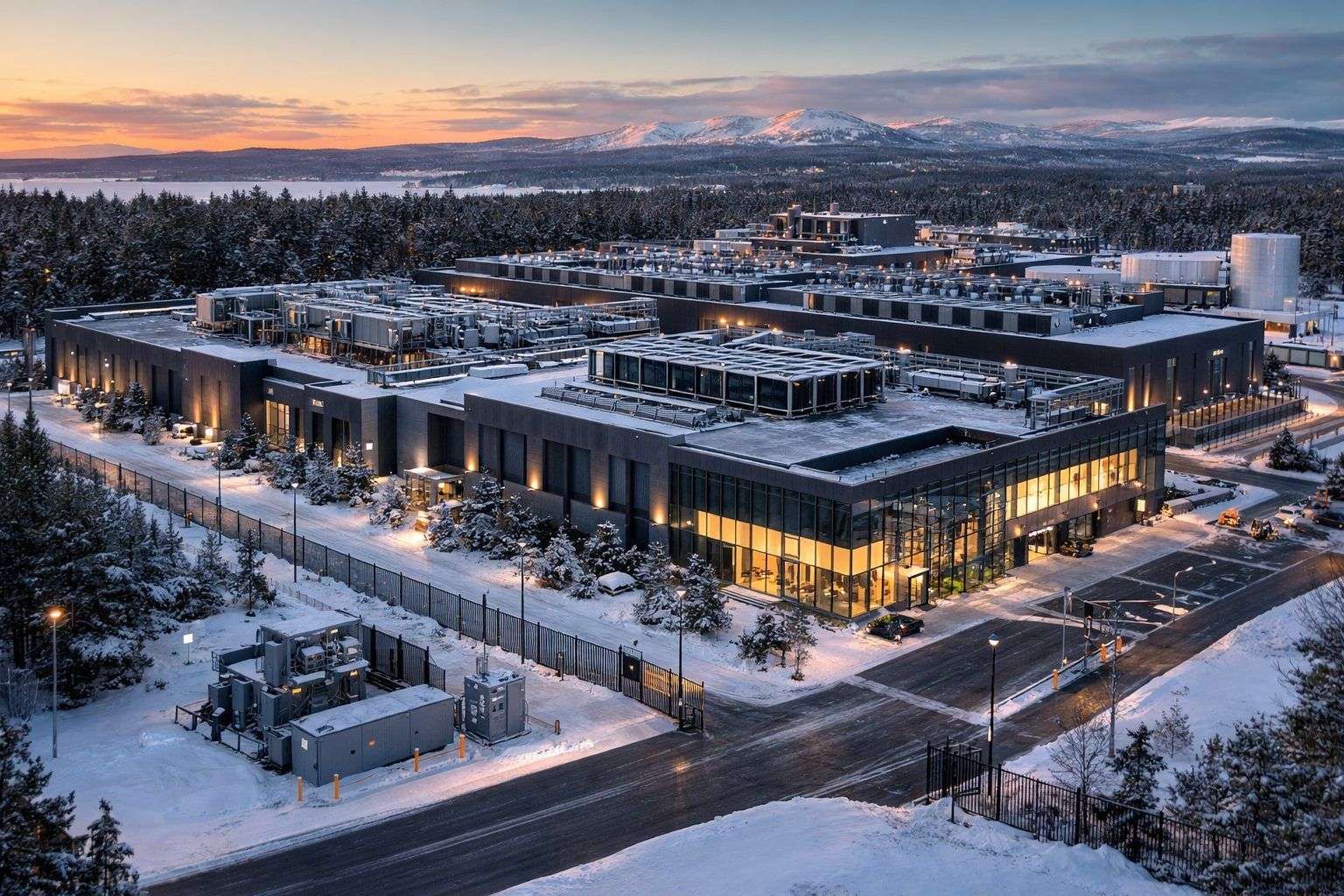
  • Cold climate enabling PUE ratios below 1.2 year-round
  • Sovereign cloud and data residency demand driver
  • Significantly lower land and construction costs than US markets
  • Stable political and legal environment for long-duration capital
3
Primary Markets
<1.2
Achievable PUE
CAD
Cost Advantage
5GW+
Demand Pipeline

PowerSite operates across Alberta, Ontario, and Saskatchewan — Canada's three primary data centre markets — with licensed brokers in each province and active relationships with utilities, landowners, municipal economic development offices, and capital providers.

// Alberta

Alberta Data Centre Land Opportunities.

Alberta is Canada's most dynamic data centre development market. Its deregulated electricity market allows operators to negotiate power purchase agreements directly with generators — enabling competitive pricing, green power procurement, and long-term rate certainty. The province has abundant available land near transmission infrastructure and a business-friendly regulatory environment.

  • Deregulated power market — direct PPA negotiation with generators
  • Large available parcels near 240kV and 500kV transmission
  • Natural gas-fired backup generation readily available
  • No provincial sales tax on data centre equipment
  • Cold climate enabling 5,000+ free-air economization hours per year

Both Calgary and Edmonton offer proximity to fibre infrastructure, available industrial land, and utility capacity. Calgary's proximity to Alberta's financial services sector drives enterprise demand; Edmonton's proximity to rural transmission corridors opens large-scale hyperscale development.

Sites within the rural Alberta transmission grid offer substantially lower land costs, available substation capacity, and reduced permitting complexity — ideal for hyperscale and AI infrastructure programs where operational economics matter more than urban proximity.

// Ontario

Ontario Hyperscale Sites.

Ontario is Canada's largest data centre market by existing inventory and demand depth. The province's proximity to US fibre routes, large enterprise and financial services tenant base, and robust electrical grid make it the preferred market for colocation operators. The Greater Toronto Area and surrounding markets have significant pent-up demand against constrained supply.

  • Largest enterprise and financial services tenant base in Canada
  • Low-latency connectivity to US East Coast and Chicago markets
  • Proximity to Equinix, Digital Realty, and co-location platforms
  • Ontario's grid modernisation enabling new large-load connections
  • Strong data sovereignty demand from Canadian financial institutions

The Greater Toronto Area's data centre market is supply-constrained, with land scarcity and utility capacity limiting new development in core markets. We identify sites in the 905/519 corridors with available power and fibre access — unlocking development opportunities before they are broadly recognised.

Ontario's utility connection process is among the most complex in Canada. PowerSite's direct relationships with Hydro One and municipal LDCs, combined with our permitting experience, are critical advantages in navigating large-load applications.

// Saskatchewan

Saskatchewan Data Centre Development.

Saskatchewan is an emerging data centre market with significant structural advantages: SaskPower's grid has available capacity at competitive rates, land costs are among the lowest in Canada, and the province's fibre infrastructure along the Trans-Canada corridor connects to both Alberta and Ontario markets.

  • Available SaskPower grid capacity at competitive industrial rates
  • Among the lowest commercial land costs in Canada
  • Trans-Canada fibre corridor connecting Calgary to Winnipeg
  • Cold climate enabling extended free-air economization
  • Provincial government supportive of industrial investment attraction

Both Saskatchewan cities offer utility access, available industrial land, and proximity to the Trans-Canada fibre corridor. Regina's proximity to the border enables cross-provincial network redundancy; Saskatoon's growth in tech and agriculture sectors drives local enterprise demand.

// Low Carbon Infrastructure

Low Carbon Data Centre Infrastructure.

ESG mandates are increasingly driving data centre location decisions. Canada's hydroelectric and nuclear baseload power gives operators access to low-carbon or zero-carbon electricity at scale — a structural advantage over US markets dependent on fossil fuel generation. Alberta's renewable energy addition program and Ontario's nuclear refurbishment further strengthen Canada's low-carbon position.

  • Quebec and Manitoba: near 100% hydroelectric power
  • Ontario: nuclear and hydroelectric baseload, expanding renewables
  • Alberta: direct renewable PPA procurement in deregulated market
  • Saskatchewan: SaskPower transitioning toward renewable generation
  • Cold climate reduces cooling energy consumption by 40–60%

Canada's Personal Information Protection and Electronic Documents Act (PIPEDA), provincial privacy legislation, and the federal government's sovereign cloud initiative create persistent demand for Canadian-domiciled data centre capacity — regardless of global market conditions. This is a structural demand floor that does not exist in most markets.

Frequently Asked.

Why build a data centre in Canada?

Canada offers abundant low-carbon power, cold climates enabling PUE below 1.2, available land near transmission infrastructure, data sovereignty regulation driving persistent demand, and competitive development costs versus saturated US markets.

Which Canadian provinces does PowerSite cover?

Our primary Canadian coverage is Alberta (deregulated power, abundant land, cold climate), Ontario (deepest demand, GTA corridor, low-carbon hydro and nuclear), and Saskatchewan (emerging market, low entry cost, government anchor demand).

How does Canadian power support data centres?

Canada generates over 80% of its electricity from non-emitting sources — hydro, nuclear, and wind. For operators with ESG commitments or hyperscalers targeting renewable claims, Canadian power is structurally advantaged over most US markets, and Alberta's deregulated market offers flexible power purchase structures.

What is the advantage of Canada's cold climate?

Cold climates dramatically reduce mechanical cooling loads, PUE, and energy costs. Canadian facilities routinely operate at PUE below 1.2 through free-air cooling — levels that Arizona or Texas operators cannot reach without major capital investment in cooling infrastructure.

How does data sovereignty drive Canadian demand?

Canadian data residency laws and post-Patriot Act concerns create persistent demand for in-country data storage from enterprises, financial institutions, healthcare systems, and government agencies — producing durable anchor-tenant demand in every Canadian market.

// Related Services

Explore More.

Land & Site Acquisition → Development Advisory → Tenant Representation → Investment Sales → US Advisory →

Explore Canadian Opportunities

Whether you are sourcing land, seeking a development partner, or deploying capital into Canadian digital infrastructure, we are the right advisor to engage first.

Submit a Project Brief →