Alberta is the only province in Canada where a data centre can contract for electricity directly with a generator. That single structural fact — deregulation — is why hyperscale and AI developers are looking hard at Calgary, Edmonton, and the rural transmission corridors between them.
Power is the constraint that now defines data centre development. Not land, not capital, not construction — power. In most of North America, large-load projects wait years in interconnection queues for capacity that regulated utilities may or may not be able to deliver. Alberta is the exception, and understanding why requires understanding how its electricity market is built differently from every other province in Canada.
What "deregulated" actually means
In a regulated electricity market — the norm across Canada — a single utility generates or procures power and sells it to customers at a rate set by a regulator. A large data centre load takes the rate it is given and joins the queue like everyone else.
Alberta runs a deregulated (competitive) wholesale market. Generation is bought and sold on an open market operated by the Alberta Electric System Operator (AESO), and large loads can contract for electricity directly with generators through power purchase agreements. For a data centre operator, this changes the entire procurement conversation.
- Direct PPA negotiation — contract with a generator for price and term rather than accepting a single regulated tariff.
- Price certainty — lock long-term rates to underwrite a 15-to-20-year asset with confidence.
- Green procurement — structure renewable PPAs to meet ESG and hyperscaler sustainability commitments directly.
- Competitive tension — multiple generators competing for a large, credit-quality load.
AI and high-performance computing have pushed rack densities and campus power demands to levels that regulated grids struggle to serve on a developer's timeline. A market where you can negotiate power directly — and pair it with new generation — is a structural advantage precisely when power is the scarcest input in the industry.
Beyond deregulation: Alberta's other advantages
Transmission and land together
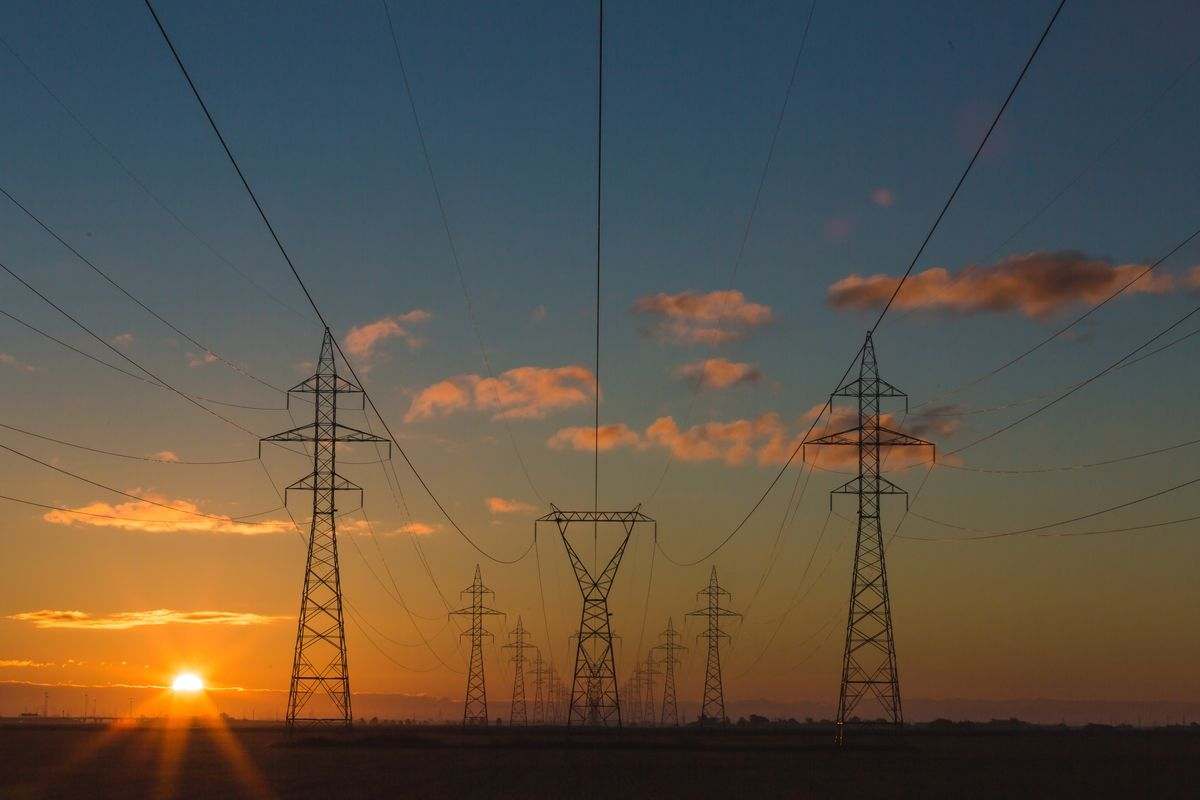
Alberta pairs a competitive power market with something equally rare: large, available parcels near 240kV and 500kV transmission. In supply-constrained US markets, land near heavy transmission is priced accordingly or simply unavailable. In Alberta — particularly the rural corridors and the Red Deer corridor between Calgary and Edmonton — powered land is both available and affordable.
Natural gas for backup and bridging
Abundant natural gas supports backup generation and combined-heat-and-power configurations, and can bridge power delivery while grid interconnections are completed — a meaningful de-risking factor for developers on tight schedules.
Cold climate, low PUE
Alberta's climate delivers thousands of free-air economization hours per year. Facilities routinely target a PUE below 1.2 — cooling economics that operators in Arizona or Texas cannot reach without major capital investment.
Tax treatment
Alberta levies no provincial sales tax, including on data centre equipment — a direct reduction in capital cost versus provinces that apply PST to hardware.
In a market defined by power scarcity, Alberta's advantage is that you can negotiate for power directly — and build the generation to back it.
Where the sites are
Calgary
Southern Alberta's demand anchor, driven by financial-services and energy-sector enterprise requirements, with established fibre density and carrier presence. Strong for operators establishing an Alberta footprint close to connectivity and customers.
Edmonton and the Industrial Heartland
Proximity to major generation, large contiguous parcels, and transmission built for heavy industrial load make the Edmonton region one of Canada's best hyperscale development environments.
Rural corridors
Sites along the rural transmission grid offer the lowest land costs, available substation capacity, and reduced permitting complexity — ideal where operating economics outweigh urban proximity, as they do for most hyperscale and AI infrastructure.
What to verify before you commit
The deregulated market is an advantage, not a guarantee. Before committing to an Alberta site, confirm:
- Available substation capacity and transmission voltage at the parcel.
- Interconnection queue position and AESO process status.
- Realistic PPA structures and pricing for your load size and term.
- Fibre route diversity and carrier options.
- Zoning, permitting pathway, and expansion headroom.
Verifying deliverable megawatts — not just proximity to power — is the step that separates a viable Alberta site from an expensive delay. PowerSite maintains RECA-licensed brokers in Alberta with relationships across generators, utilities, and landowners to source and de-risk sites before capital is committed.
PowerSite Data Centre Group advises investors, operators, tenants, and landowners on data centre land, leasing, acquisitions, and development across Alberta, Ontario, Saskatchewan, and the United States. Submit a project brief or download our free Site Selection Checklist.